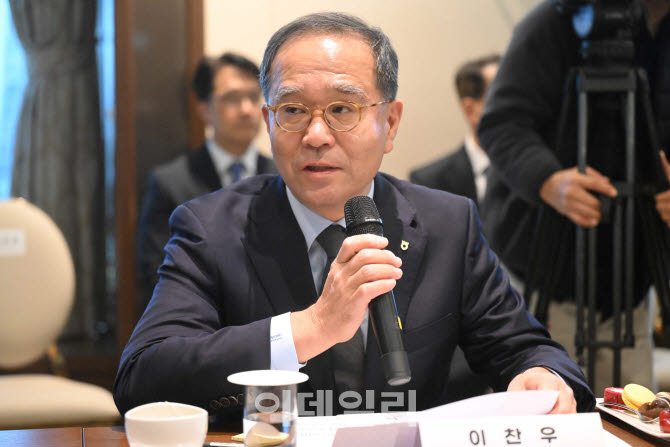
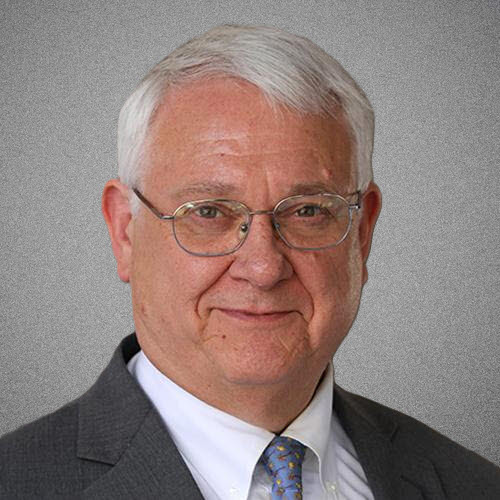
John J. Hamre, President of the Center for Strategic and International Studies (CSIS).
John J. Hamre, President of the Center for Strategic and International Studies (CSIS), diagnosed the current international situation “not the emergence of a completely new order, but rather the reappearance of traditional great power politics in a much rougher and more unstable form,” in an interview ahead of the Edaily Strategy Forum.
He explained that great power politics, which had operated beneath the surface for the past 80 years, have now become fully visible, amplifying global disorder. “What is new is the aggressive manner the U.S. President is treating allied nations,” he noted. “European allies are deeply unsettled, and while Asian allies remain uncertain about U.S. commitments.”
◇Prolonged Hormuz Blockade Could Trigger Global Economic Shock… War Remains a Major Variable
Hamre made it clear that the U.S.-Iran war is not a mere regional dispute but a “systemic risk” that could directly lead to a slowdown in global growth. While the nature of the shock may vary by country, he warned that the entire world would ultimately be affected.
“This situation appears to have become deeply personal for President Donald Trump. It is difficult to predict what the key to resolution might be,” Hamre said. “At the moment, the U.S. may be achieving ’tactical victories‘ in battles, but Iran appears to be winning the ’strategic victory‘ in the overall picture, and that is the dilemma.” He warned, “The conflict between the U.S., Israel, and Iran is already affecting the global economy. If the blockade of the Strait of Hormuz continues for more than another month, energy and logistics flows will be paralyzed, and global economic growth will take a direct hit. Producers would also hesitate to make additional investments in manufacturing facilities.”
Hamre characterized today’s hegemony competition as fundamentally different from the Cold War. Whereas the Cold War was primarily military and diplomatic confrontation in nature, today‘s rivalry is centered on technology and economy. He noted that competition in the technology and industrial ecosystems is particularly far more intense because China possesses strong economic and technological capabilities.
“While U.S., Europe, Korea, and Japan generally view the role of government as balancing freedom with social responsibility, China operates under a model where the state directly controls citizens and businesses,” he said. “The biggest challenge of this era is that China is leveraging Western commercial mechanisms to strengthen authoritarian power.” He predicted, “No country can easily catch up with China’s scale and momentum in the short term. China will maintain its dominant position based on its enormous domestic market size and investment capabilities.”
Technological hegemony competition is also directly influencing supply chain reorganization. He observed that the ‘lowest-cost production’ logic that dominated global companies for the past 30 years has been fundamentally shaken since the COVID-19 pandemic. In its place, reliability and resilience have become the core values of supply chains.
He stated, “The core value of supply chains has shifted from ‘lowest cost’ to ‘reliability.’” He added, “It is entirely rational for Korean companies to reduce their investment exposure in China due to rising production costs and intensifying protectionism, and expand instead into ASEAN countries and the U.S.
◇”Few Leaders Take Notes… Impression of President Lee‘s Intellectual Curiosity“
Hamre recalled his three meetings with President Lee Jae-myung and shared a special impression during the interview.
”What surprised me most in my conversations with President Lee was his intellectual curiosity,“ Hamre recalled. ”When discussing international affairs, he did not just listen. He paid close attention, then took out a notebook and things down himself.“ He added, ”A leader who asks questions and records every answer is a extremely rare sight anywhere in the world.“ He interpreted President Lee’s attentiveness and habit of note-taking not simply as habit, but as evidence of a leadership style determined to carefully identify Korea‘s precise national interests within a complex geopolitical landscape.
Emphasizing that the U.S.-Korea relationship has evolved beyond a simple alliance into a comprehensive strategic partnership, Hamre stressed the importance of the U.S. to remain a trustworthy partner.
”Korea has the capacity to determine its own direction. That is the essence of ’strategic autonomy,‘“ he said.
”For the past 50 years, Korea has pursued this path by carefully evaluating its interests national from multiple angles, and it will continue to do so.“ He added, ”I believe the U.S. must remain a steady and reliable partner for Korea. The U.S. should accept that Korea will design its own future based on its national interests. Personally, I believe the interests of Korea and the U.S. are perfectly aligned.“
Meanwhile, Hamre will deliver the keynote speech at the 17th Edaily Strategy Forum under the theme ”The Second Great Divergence: Clash of Hegemony and the Reshaping of Global Order,“ where he will share deeper insights on how Korea can secure strategic autonomy.
◇ About John Hamre…
△Born 1950 △M.A. and Ph.D., Paul H. Nitze School of Advanced International Studies (SAIS), Johns Hopkins University △Rockefeller Foundation Fellow, Harvard Divinity School △26th U.S. Deputy Secretary of Defense △U.S. Under Secretary of Defense (Comptroller) △Chairman, Defense Policy Board △(Current) President, Center for Strategic and International Studies (CSIS)