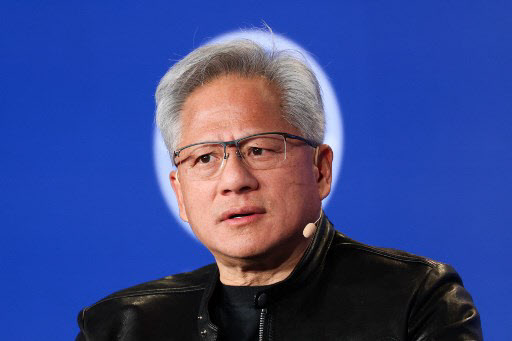
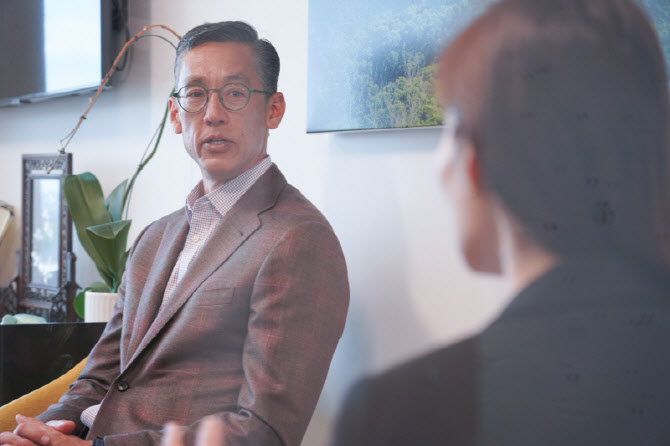
Rexon Ryu, President of The Asia Group (TAG) and former Non-proliferation Director at the White House National Security Council (NSC), shared his insights on Korea’s diplomatic and security strategies during an interview conducted ahead of the 17th Edaily Strategic Forum. (Photo: The Asia Group)
Ryu diagnosed the current clash as “the result of long-accumulated structural confrontation reaching a breaking point,” adding that “although we are in a short-term ceasefire, the current unstable state of tension is likely to persist for a significant period.”
He views the U.S. pressure on Iran not merely as a military or diplomatic issue, but as one deeply intertwined with domestic U.S. politics, alliance restructuring, and President Donald Trump‘s “transactional” approach to security strategy. He also pointed out two critical miscalculations in Washington.
“The U.S. administration viewed domestic protests in Iran as an opportunity to weaken the regime and escalated pressure accordingly,” Ryu said. “But this instead reinforced regime cohesion and strengthened the logic of retaliation within Iran.” He further noted that “following Hamas’ surprise attack on October 7, 2023, Israel, to some extent, encouraged direct U.S. involvement.”
Regarding the recently declared ceasefire, Ryu offered a cold-eyed assessment, defining it as a “tactical pause” due to a period of diminishing strategic returns rather than a policy shift. “As the costs of war surged and the impact on global logistics and energy markets approached critical levels, the U.S. effectively entered a temporary period of recalibration,” he noted. “Uncertainty in the Strait of Hormuz will take considerable time to resolve, and we will see a phase of ‘managed tension’ where maritime pressure and sanctions continue simultaneously.”
Ryu emphasized that Korea must move beyond its role as a “frontline state” tasked with defending geopolitical boundaries. Instead, as an advanced industrial economy and a global leader in core technologies, Korea must adopt a new framework for survival, where core technologies and industrial capabilities are directly tied to national security..
“The U.S.-Iran conflict has once again demonstrated that energy bottlenecks, supply chain vulnerabilities, and dependence on critical raw materials are, at their core, national security issues,” Ryu said. “To address these challenges, Korea must establish a clear national roadmap that prioritizes key sectors, promotes strategic diversification, implements selective stockpiling, and fosters close cooperation with trusted partners, and prioritization of key sectors. Furthermore, we must expand the definition of ‘resilience’ to encompass a broader scope, including shipping access, energy security, digital infrastructure, reliable supplier networks, and the ability to rapidly scale production in critical defense and technology sectors.”
◇ “Semiconductors, Defense, and AI: Korea as U.S.‘s Core Economic-Security Partner”
Ryu also presented a new perspective on the Trump administration’s increasing pressure on allies, arguing that President Trump‘s rhetoric should not simply be viewed as a simple threat but rather as a demand for “alliance modernization.”
“While President Trump’s remarks will certainly be used as as leverage in future negotiations over defense cost-sharing, trade, and investment, it is important to distinguish this as a call for modernization rather than a weakening of the alliance,” Ryu interpreted. He emphasized that while the U.S. expects allies to shoulder greater responsibilities, its strategic interests in the Korean Peninsula and the Indo-Pacific remain unchanged. “The ROK-U.S. alliance has evolved into a comprehensive strategic partnership, and Korea is now not only in deterring North Korea but also playing as a core partner with cutting-edge industrial and technological capabilities.”
At the same time, he advised Korea to increase its “strategic autonomy” while maintaining the alliance with the U.S. He proposed Korea can ensure that the alliance and its domestic capacities function in a complementary manner, by simultaneously strengthening defense capabilities, energy security, advanced technologies, and diplomatic networks.
“While the ROK-U.S. alliance remains essential, the importance of strategic autonomy is growing,” Ryu noted. “The most effective approach is what I call ‘capability-based autonomy.’ By strengthening our defense, energy, cutting-edge technology, and diplomatic networks, we can create a synergy where the alliance and our sovereign capabilities complement each other. This, in turn, will simultaneously expand both Korea‘s policy flexibility and its negotiating leverage.”
Ryu also warned that Korea’s technology strategy is being tested amid intensifying international environment of U.S.-China rivalry. He emphasized that Korea must rapidly strengthen its national strategies, particularly in the fields of defense technology, Artificial Intelligence (AI), cyber security, and space.
Ryu noted, “Technology competition is no longer just a matter of innovation; it now encompasses export controls, investment regulations, standards competition, and alliance-based supply chain restructuring.” He added, “Korea needs a much clearer national strategy regarding which sectors it intends to lead and with whom it will cooperate.”
He identified several key variables that could shape the global order over the next one to two years: △ the future trajectory of U.S.-China relations △ the potential escalation of the Iran conflict △ the strategic alignment among China, Russia, North Korea, and Iran △ economic bloc formation centered on technology and resource controls △ domestic political developments in major democracies, including the U.S. presidential election.
“These variables will determine the future direction of the security, technology, and the global economic orders,” he stated. “Korea must design its industrial competitiveness alongside its diplomatic and security strategies together as an integrated national framework.” He further added, “Korea holds major strengths in semiconductors, batteries, nuclear power, defense industries, and AI manufacturing. By strengthening competitiveness in these sectors and expanding investment in future technologies, Korea can secure not only economic gains but also diplomatic influence and strategic autonomy amid the transformation of the global order.”
Ryu is scheduled to share deeper insights as a keynote speaker on the second day of the 17th Edaily Strategic Forum, to be held on June 16~17 at The Shilla Hotel, Seoul, under the theme: “Security and Defense Strategy in the Era of the ”Monroe Doctrine“ and Self-Reliance.”
◇ About Rexon Ryu
△ B.A. in Political Science, University of California, Berkeley △ Master in Public Policy (MPP), Princeton University △Served in the U.S. Department of State and the U.S. Embassies in Cairo and Jerusalem △ Foreign Policy Advisor to U.S. Senator Chuck Hagel △ Advisor to the Deputy U.S. Ambassador to the United Nations △ Staff Member, White House National Security Council (NSC) △ Chief of Staff to U.S. Secretary of Defense Chuck Hagel △ Head of Korea Practice, The Asia Group (Current) △Chairman of the Board, TAG Foundation (Current) △ President, The Asia Group (Current)