In a recent interview with Edaily, Rep. Park Soo-min of the ruling People Power Party, representing Seoul‘s Gangnam-B district, diagnosed the current state of the Korean economy as facing a form of “stagflation”—a combination of economic slowdown and high inflation. According to Park, while sectors such as semiconductors and AI are enjoying strong growth, the benefits are failing to generate positive spillover effects into domestic demand. He analyzed that despite robust exports and stock market performance, the persistently weak won, trading in the 1,530 range against the dollar, and ongoing inflationary pressures reflect a decline in the attractiveness of domestic capital markets. Having built an extensive career in public service at the former Ministry of Finance and Economy as well as the private sector, Rep. Park is scheduled to share these critical insights on the second day of the 17th Edaily Strategy Forum on June 16-17.
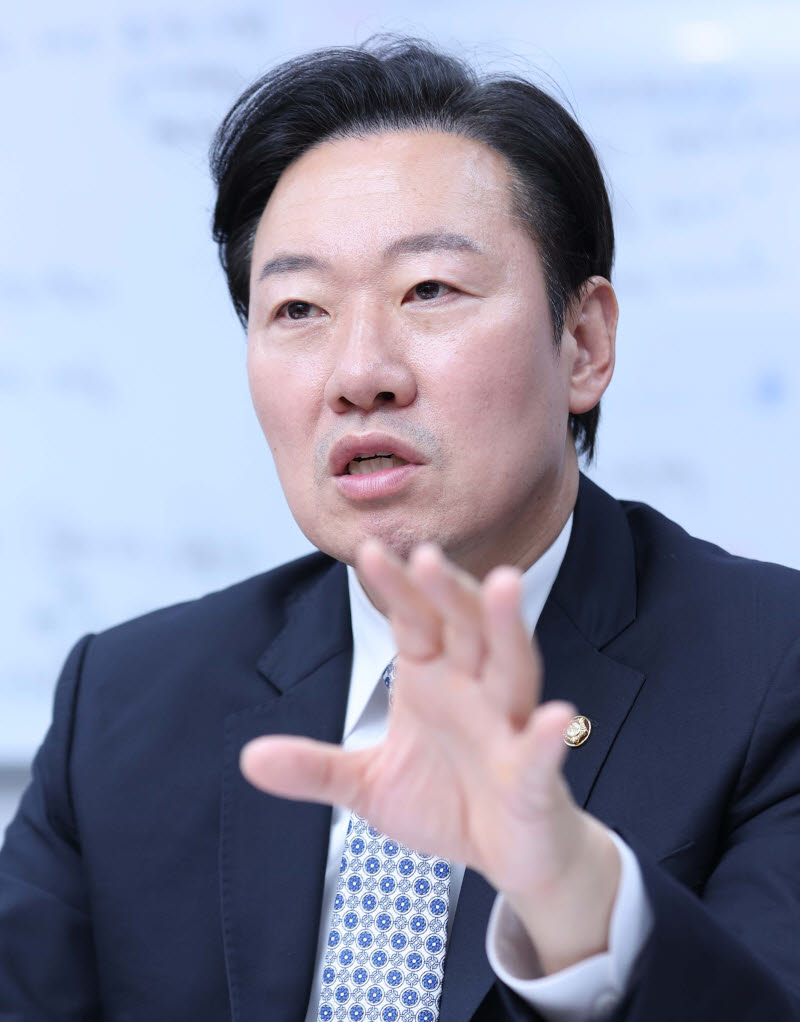
Rep. Park Soo-min speaks during an interview with Edaily at the National Assembly in Yeouido, Seoul, on June 12. (Photo = Edaily, Reporter Noh Jin-hwan)
External factors, such as global supply chain crises and escalating trade barriers, are also contributing to the slowdown in domestic demand. Korea faces intense pressure from U.S. President Donald Trump, who leverages tariff negotiations to force foreign investments into the U.S., while the country remains highly vulnerable to resource supply chain risks caused by global conflicts. The core issue is that these risks have become structurally entrenched. “These challenges originate from geopolitical risks, which means they are deep-rooted and likely to persist,” Park warned. “Whether it comes as crude oil shocks or supply chain disruptions involving urea solution and rare earth materials like we have experienced before, these issues will continue to surface.” He emphasized that supply chain management has now become a core responsibility of national governments.
Rep. Park proposed a comprehensive overhaul of the real economy to overcome these overlapping domestic and external crises. He emphasized that easing regulations is necessary to strengthen the economy’s underlying investment capacity, while simultaneously securing infrastructure aligned with the AI-driven global market transformation. He particularly stressed the importance of securing critical resources such as electricity and water, both of which are essential for AI operations. “During the Lee Myung-bak administration, I internally advocated for the privatization of Hynix,” Rep. Park recalled. “Had that privatization been delayed, the HBM (High Bandwidth Memory) that drives the AI boom today would not exist. That demonstrates how crucial timely decision-making can be.”
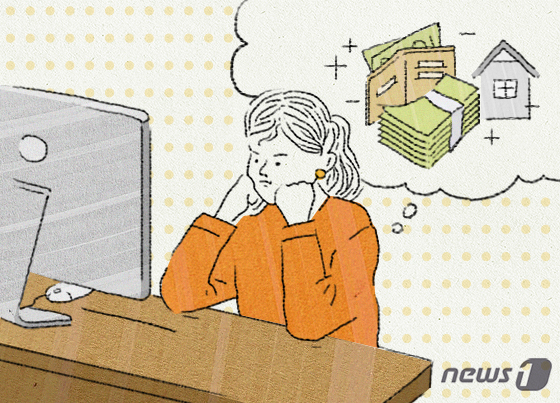
He argued that without such structural reforms in the real economy, cash-based stimulus measures alone cannot generate sustainable growth and may instead worsen the cycle of weak domestic demand. “Universal fiscal spending only exacerbates inflationary pressures. When monetary authorities are forced to raise interest rates to control inflation, it is the ordinary citizens who suffer most,” he said. “That is how a vicious cycle in domestic demand develops.” He explained that instead of aggressive public spending, the government should maintain a balanced fiscal stance while providing targeted support exclusively to vulnerable demographics.
Regarding rising pressure for higher interest rates, Rep. Park suggested, “Monetary authorities should consider managing broad money supply (M2) growth so that it does not significantly exceed real GDP growth.” This advice stems from the concern that excessive market liquidity could further stimulate inflation, ultimately triggering additional interest rate hikes.
Park also criticized Korea‘s highly confrontational political culture, arguing that it undermines business confidence and discourages investment. He argued that politics should focus on creating a business- and investment-friendly environment rather than election-oriented populist policies.
“Every time the administration changes in Korea, politics paralyzes business leaders with endless rounds of lawsuits, accusations, and search-and-seizure operations over winners and losers, which shrinks businesses,” Rep. Park emphasized. “We can protect the most vulnerable groups during periods of high inflation and a weak currency only when politics creates a business-friendly environment.”