“Digital assets are like one enormous elephant,” said Park Jong-baek. “Until now, we have touched only one part of the elephant and argued over whether that part needs fixing and, if so, how. Approach it that way, and you end up with far too many reasons not to act.”
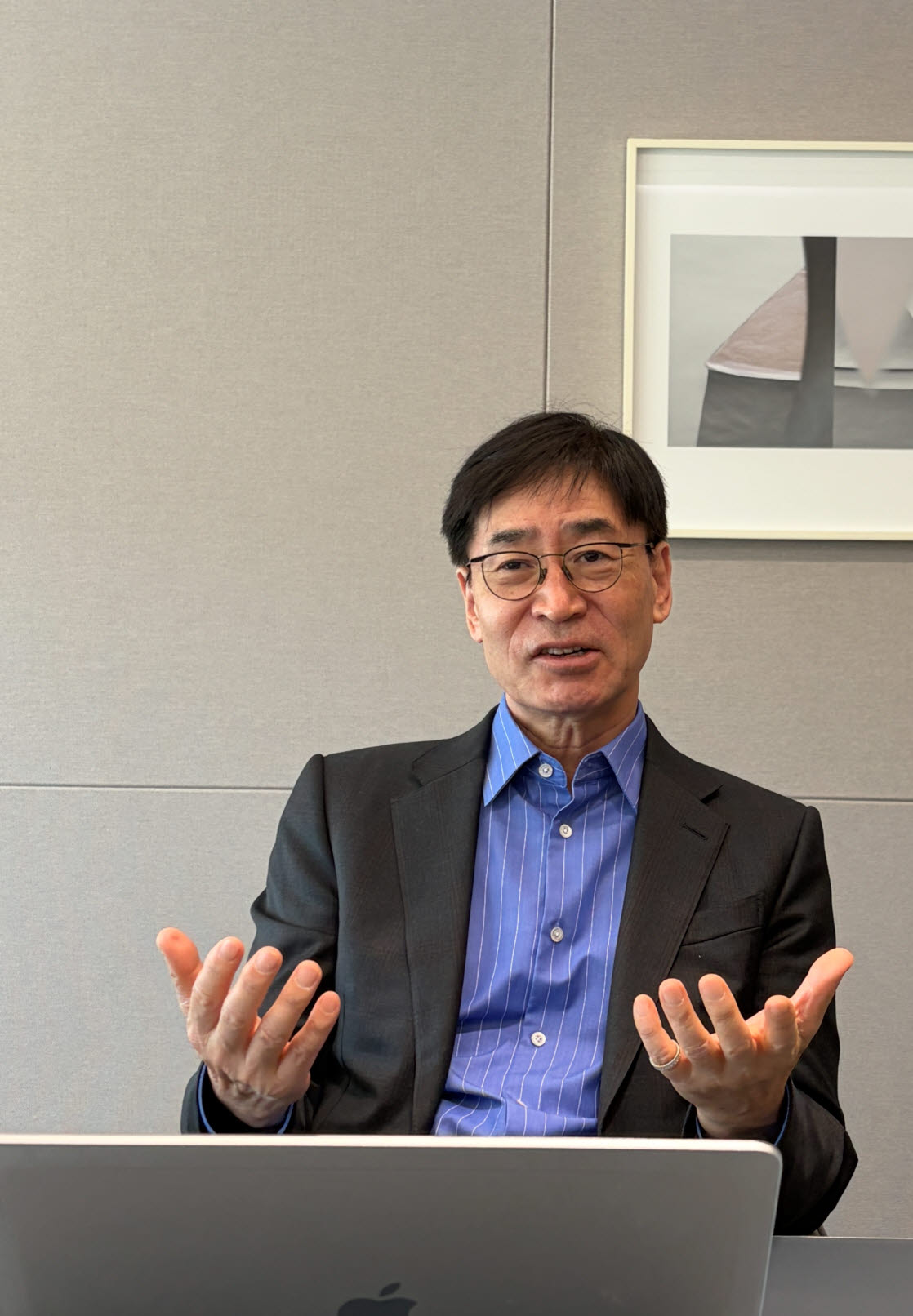
Park Jong-baek, president of the Seoul Crypto Institute
The same is true of the debate over taxing crypto, Park said. When the question is framed narrowly as whether to tax, the case for taxation almost always prevails. Only when the issue is weighed against the broader goals of building the industry and securing global competitiveness, he argued, does the case for deferring the tax gain traction. “That is the bigger picture we intend to draw,” he said.
“Each time an incident occurred, the instinct to contain the risks first dominated the discussion,” he said. “As a result, the same debates kept recurring.”
Park has advised domestic and foreign blockchain and crypto companies and projects since 2017. He said his years of regulatory work had also made him acutely aware of the limits of his profession.
“I have done a great deal of regulatory advisory work, but my forecasts repeatedly proved wrong,” he said. “I came to believe that a lawyer’s role of interpreting and forecasting regulation can only go so far.”
Established as a nonprofit incorporated association, SCI has enlisted 18 experts from Korea and abroad, drawn from the legal profession, academia and industry, as research fellows and advisers. It will begin operations with an inaugural seminar on Oct. 28.
The Industry Law That Never Arrived
Park first highlighted how Korea‘s digital-asset legislation has advanced slowly, bogged down in one-off issues.
The first major change came after a surge in Bitcoin prices drew widespread public attention to virtual assets. Lawmakers responded by bringing virtual assets under the country’s anti-money-laundering regime through the Act on Reporting and Using Specified Financial Transaction Information.
The comprehensive legal framework the industry had sought, however, was put off as too complex. Policymakers instead chose to enact the Virtual Asset User Protection Act first.
“Everyone agreed to move quickly on the premise that user protection would come first, followed by a comprehensive legal framework,” Park said. “But the promised industry legislation never materialized.”
Interest revived when stablecoin pledges emerged during the presidential campaign, he said. Yet even after the new government took office and bills were introduced, the legislation has continued to stall.
Security tokens have followed a similar trajectory. An amendment to the Electronic Securities Act earlier this year brought distributed-ledger-based security tokens into the regulatory system. Key details, however, including the permitted scope, the timing of implementation and the technical structure, were left to subordinate regulations.
“Even if the system takes effect next February, what matters is the scope within which companies can operate and the platforms and technical structures they can use, yet the enforcement decree has not even been issued,” Park said.
“That stands in sharp contrast to the US, which is broadly permitting the tokenization of listed stocks through a sandbox approach,” he added.
Park also spoke frankly about his frustrations as a lawyer.
“The market always asks where regulation is headed,” he said. “Each time, I offered what I considered a reasonable outlook, but many of those forecasts proved wrong. For nearly a decade since 2017, we have been repeating debates that are draining and unproductive.”
The gap between how Korea is perceived abroad and the reality of its regulatory environment was another reason he decided to establish SCI.
“Foreign companies initially expected the framework to develop sensibly, because the Korean market was dynamic and they heard many encouraging signals from the government and the National Assembly,” Park said. “But years passed, the same discussions kept repeating, and above all, the reasons were never explained transparently.”
“Some of the companies raising these concerns may grow into financial institutions on the scale of JPMorgan or Goldman Sachs,” he said. “If we cannot properly explain Korea‘s situation to companies like that, then something is wrong with the way we operate.”
A Think Tank Built for Implementation
SCI plans to analyze the digital-asset and blockchain industry as a whole, along with the legal, regulatory and institutional frameworks that govern it, and to put forward policy alternatives.
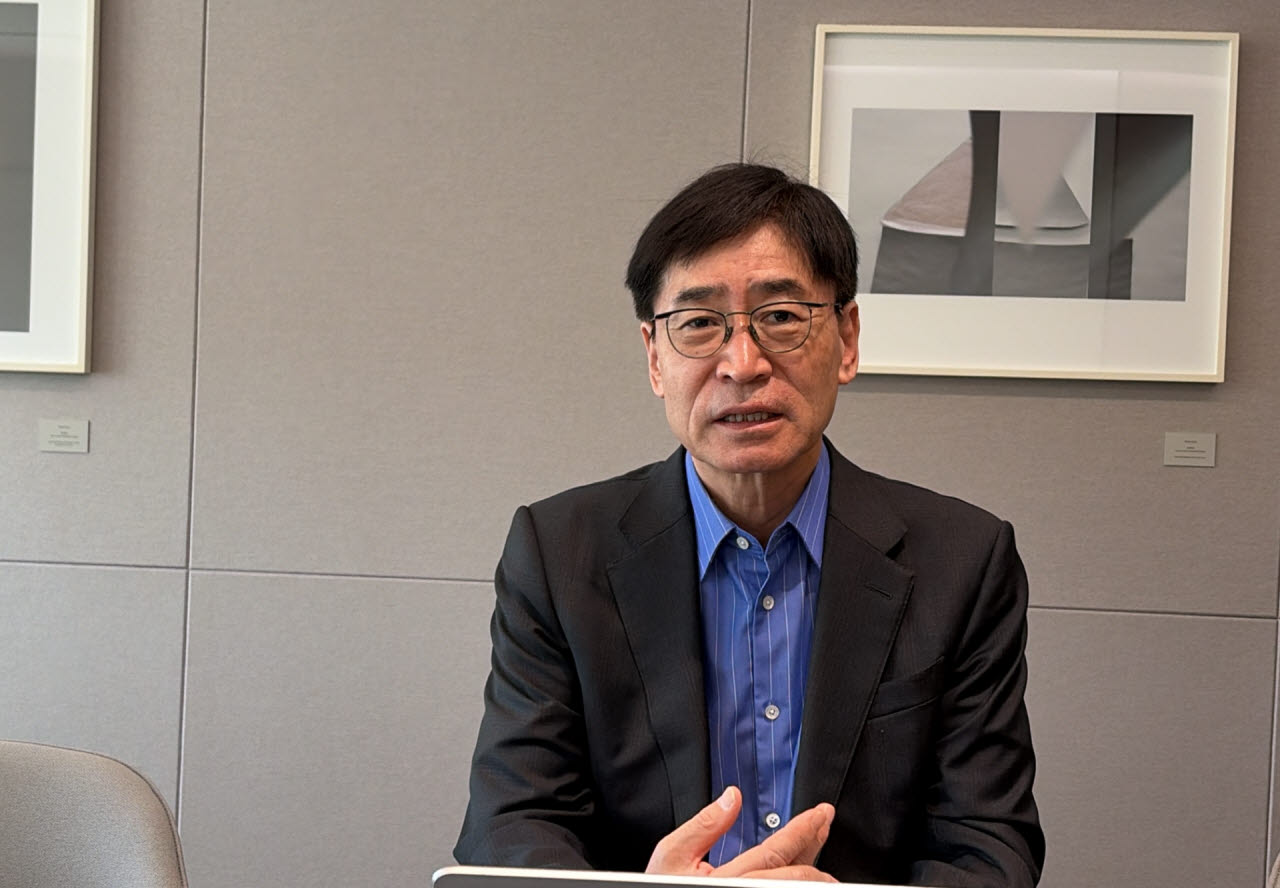
Park Jong-baek, president of the Seoul Crypto Institute
A research committee will anchor the institute’s work. For the time being, rather than establishing standing subcommittees, SCI will convene fellows with the relevant expertise on an issue-by-issue basis.
It also plans to form a Policy and Regulatory Improvement Council made up of member and sponsor companies that operate in the market or are preparing to launch new services.
“We are neither a university nor an institution that pursues research for its own sake,” Park said. “We need to capture precisely what the market needs.”
Under this structure, the council will identify and vet issues arising in the field, and the research committee will carry out the core research. The findings will then be refined with input from industry and developed into public policy proposals.
Park cited won-denominated stablecoins as a prime example. “Right now, attention is focused almost entirely on issuance,” he said. “But the discussion needs to extend to how they will actually be used, how they relate to the internationalization of the won, and how they should be accommodated and fostered within the institutional framework.”
He also named the tokenization of listed stocks and the development of Korea‘s capital markets as key research priorities.
“The aim is not to relay individual companies’ complaints or demands for deregulation,” he said. “It is to identify, based on input from the field, the issues that matter to the Korean economy as a whole.”
The recruitment of foreign experts as research fellows reflects the same approach.
“Until now, globalization has meant focusing solely on the outbound side, on expanding overseas,” Park said. “True globalization requires both inbound and outbound.”
“Singapore and Hong Kong moved quickly to put regulations in place, but their market structures are fundamentally different from Korea‘s,” he said. “To compare those differences objectively, the participation of foreign experts and companies is essential.”
SCI is also seeking to recruit foreign companies as members and sponsors.
’Not Too Late, but Time Is Running Short‘
The European Union’s Markets in Crypto-Assets Regulation, or MiCA, has entered full implementation following a transition period.
In the US, implementation of the GENIUS Act is under way, while the CLARITY Act has been held up in Congress.
Switzerland, Singapore, Hong Kong and Japan are also moving quickly to overhaul their regulatory frameworks. Korea‘s National Assembly, by contrast, has only now begun deliberating a Digital Asset Basic Act.
Asked whether Korea’s digital-asset industry has already fallen behind, Park said: “No country has a perfect framework yet. We do not have much time left, but I do not think it is too late.”
He cautioned, however, that “countries that have set a clear direction will put supplementary measures in place far more quickly and efficiently. If Korea keeps repeating the same debates as it does now, the gap could widen.”
Park pointed to three strengths that work in Korea‘s favor.
The first is a broad retail-investor base. “Korea has more than 10 million crypto investors, and trading volume is substantial, although it varies with prices,” he said.
The second is the country’s ability to adopt information technology quickly. Korea has built powerful digital platforms spanning big tech, e-commerce and payments.
“Moving to distributed ledgers and blockchain on top of that foundation is an entirely different undertaking from doing so in a country that lacks it,” Park said.
The third is the competitiveness Korea has accumulated across manufacturing and other industries.
Park said he puts the question about the Korean market directly to global companies.
“I ask them: Korea‘s regulatory process is complicated, and the same situation recurs two or three years later, so do you still want to enter the market? And they tell me they still do,” he said.
“From the perspective of foreign companies, Korea is an extremely attractive market apart from the regulatory issues,” he said. “Letting this opportunity slip away would be truly foolish.”
“Because the opportunity is still alive, I do not believe time has run out,” he added. “But the clock keeps ticking, and that is precisely why a think tank is needed.”
’Tokenization Will Transform Every Industry‘
Taxation has recently emerged as one of the most contentious issues in Korea’s crypto market.
There are concerns that if a tax takes effect before the Digital Asset Basic Act is enacted, retail investors may shift to offshore exchanges or perpetual futures markets. That could erode Korea‘s domestic spot-trading base, one of the market’s key strengths.
Park said he shares those concerns but argued that “whether or not to tax is ultimately a debate over one piece of a larger problem.”
“There is the tax-fairness argument: if you made a profit, why should you not pay tax?” he said. “If the debate starts from that premise, those arguing for a deferral are bound to lose.”
“The question we should be asking, from a big-picture perspective, is whether it is appropriate to begin taxing simply because the government has the authority to do so, when Korea is not yet sufficiently prepared to nurture a new industry and secure global competitiveness,” he said.
In Park‘s view, the starting point of that bigger picture is tokenization. “Just as artificial intelligence is transforming every industry, tokenization will ultimately affect every industry as well,” he said. “When AI agents trade real estate or other real-world assets, they are likely to use tokenized assets and settle payments with tokens such as stablecoins. The future competitiveness of Korean industry depends on how it embraces tokenization.”
After roughly a year of preparation, SCI plans to pursue three core agendas.
The first is securing the future competitiveness of the real economy. “Korean manufacturing is highly regarded around the world today, but if it does not actively embrace tokenization, it risks becoming an outdated industry,” Park said. “Tokenization and new payment instruments are worth testing across the vast supply chains and industrial ecosystems controlled by Korea’s large conglomerates.”
The second is establishing Korea as a hub for tokenized capital and financial markets. Park shared a lesson he drew from studying international finance in the UK: “A financial hub is not created by putting up buildings and lowering costs.” That, he said, is why Korea‘s earlier push to become a “Northeast Asian financial hub” failed to deliver results.
“The US regards tokenization as the most significant change since its securities law framework was established in the 1930s,” Park said. “It was difficult for us to become a hub in traditional financial markets, but in tokenized markets we can aim to become a new one. That is a far more realistic goal than the slogans of the past.”
The third is embracing the crypto ecosystem as a whole. “It is inconsistent to talk about tokenizing the real economy and becoming a capital-markets hub while excluding the crypto ecosystem,” he said. “Trading tokenized assets and using stablecoins ultimately depend on blockchain mainnets and the token ecosystems built on top of them, yet Korea has continually tried to push them out or minimize them.”
He also said financial regulators’ restrictive approach to the technical structure of security tokens is “out of step with the broader trend.”
A Dynamic Market, and a Government Moving the Other Way
Asked how SCI‘s research would be translated into actual policy, Park acknowledged that “there is no established method yet, and that in itself is a major challenge.”
He said Korea’s experience of government-led economic growth remains deeply embedded in its regulatory system. “Korea achieved enormous success through government-led growth, and that experience persists strongly in the form of positive regulation,” he said.
Under a positive regulatory system, only activities expressly permitted by law are allowed, and everything else is prohibited in principle.
“Many research institutes take a top-down approach, aligning their work with the direction set by the government,” Park said. “That way, you cannot see what the government is missing.” Korea has very few independent private think tanks that address such issues comprehensively, he added.
Park identified the disconnect between Korea‘s market and its government as the central problem.
“Koreans are so dynamic and creative that they invent new rules even when playing go-stop or golf,” he said, referring to a popular Korean card game. “Yet the government moves in the opposite direction and fails to fully embrace that dynamism and diversity.”
“Europe drafted MiCA on the strength of a long tradition of think tanks and institutional design, and in Japan, experts from the Liberal Democratic Party publish a white paper every year that the government incorporates into policy,” he said. “In Korea, by contrast, the market moves first, but the government views it only as something to be managed and controlled.”
He also pointed to the US. “The US sets out a national strategy, and multiple regulators produce comprehensive reports and policies based on it,” he said. “Those documents shape the direction of the industry worldwide.”
“Right now, about all young Korean founders can say is, ’Please postpone the tax,‘” Park said. “There is not a single document that systematically lays out the big picture for the industry.”
“It is difficult to bring about major change by approaching individual ministries and asking them to ease specific regulations,” he said. “I want to share comprehensive research with the market and place my trust in the market’s energy.”
Park also raised concerns about the rule of law. “The essence of the rule of law is that not only citizens and companies but also the government must abide by the law,” he said. “If only the regulated must obey the law while the government can impose rules without any legal basis, that is not the rule of law.”
He cited restrictions on corporations opening accounts at crypto exchanges as a prime example. “There is no clear legal basis for prohibiting it, yet in practice it remains blocked,” he said.
“Even bodies such as the Regulatory Reform Committee do not address the substance of these problems and simply accept the status quo,” Park said. “That is why, even when administrations change and presidents pledge to sweep away regulations, little changes in practice.”
Making Korea a ‘Global Crypto Platform Nation’
Park‘s ultimate vision is to turn Korea into a “global crypto platform nation.”
“President Trump set out a simple and clear national goal of making America the crypto capital of the world,” he said. “Under that goal, the Securities and Exchange Commission, the Commodity Futures Trading Commission and other agencies are each pursuing their own policies. Korea could consider a similar direction.”
He emphasized, however, that this does not mean ceding the domestic market to foreign companies.
“If we establish the right rules of competition, we can retain a substantial share of the economic benefits at home,” Park said. “Requiring a certain level of capital investment or employment would boost domestic investment, jobs and tax revenue, and give young Koreans more opportunities to work at global companies.”
He also argued that competing with foreign firms would make domestic companies stronger.
“Just as exposure to a wide range of foreign films raised Korean audiences’ expectations and helped the Korean film industry advance, our companies can grow only by competing with world-class firms in their home market,” he said. “Offering a small amount of government funding and telling companies to go abroad and try their luck is far too narrow an approach to globalization.”
The stablecoin debate, Park said, also needs to move to the next stage. “We are past the point of asking why Korea has no won stablecoin when dollar stablecoins dominate globally,” he said. “We need a concrete discussion of how won stablecoins and new payment methods can be used within the ecosystems of our large conglomerates, which operate global supply chains, and what needs to change to make that possible.”
“When the government has not granted approval and the National Assembly has not passed the necessary legislation, even large companies find it difficult to speak up,” he said. “SCI will go beyond relaying the difficulties of individual companies and explain how specific institutional changes would affect industry and the broader economy.”
Throughout the interview, Park returned to the urgency of the moment. “People assume that because we have done well in manufacturing, we will remain competitive, but past performance does not guarantee future results,” he said. “Through the objective voices of foreign companies and experts, we need to instill a sense of urgency that if we wait any longer, we could miss the opportunity entirely. Some form of shock therapy is needed.”