The pharmaceutical sector fell 0.97% from the previous session. Of 161 stocks, 47 advanced, 15 were unchanged and 99 declined. With decliners outnumbering gainers by more than two to one, selling pressure prevailed across much of the sector.
By contrast, the life sciences sector rose 0.44%. Among 92 stocks, 27 advanced, nine were unchanged and 56 declined. Although the sector index finished higher, the number of declining stocks was more than double that of advancing stocks, suggesting that gains in a handful of stocks lifted the overall index.

(Graphics by ChatGPT)
Huons Global hit the daily upper limit after concerns over shareholder value eased following the cancellation of the proposed merger between Huons and Huonslab. Vivozon Pharmaceutical also posted a sharp gain on expectations surrounding a supply agreement for its non-opioid analgesic Anapra Injection in China and a potential expansion into the broader mainland market. CG Invites also advanced as attention turned to positive global Phase 3 results from Moderna and Merck’s personalized mRNA cancer therapy.
◇Huons Global hits upper limit after Huons-Huonslab merger scrapped
Huons Global closed at the daily upper limit after the group abandoned plans to merge Huons with Huonslab. Buying interest intensified as concerns eased that transferring Huonslab, a key unlisted subsidiary of the holding company, to another listed affiliate could undermine shareholder value.
According to KG Zeroin’s MP Doctor, formerly MarketPoint, Huons Global closed at KRW 30,900, up KRW 7,100, or 29.83%, from the previous session. The stock jumped to the daily price limit shortly after the market opened and remained there through the close.
The immediate catalyst was the cancellation of the merger plan announced a day earlier. On Aug. 26, Huons held a board meeting and decided to withdraw its previous resolution to absorb unlisted Huonslab, terminating the merger agreement. As a result, the extraordinary shareholders’ meeting and other procedures related to the transaction were also canceled.
Huons had originally decided on May 18 to absorb Huonslab in an effort to strengthen its biopharmaceutical research and development capabilities and secure new drug pipelines. The merger values of Huons and Huonslab had been set at KRW 34,062 and KRW 14,500 per share, respectively, with a merger ratio of 1 to 0.4256893.
The plan, however, drew opposition from Huons Global shareholders. Huonslab is a key unlisted subsidiary in which Huons Global holds a 64.1% stake. Some investors argued that the future value generated by Huonslab’s growth could effectively shift from Huons Global shareholders to Huons shareholders. A group of minority shareholders even organized a petition opposing the merger.
A decline in Huons shares after the merger announcement also became a burden. Although the merger value for Huons had been set at KRW 34,062 per share, its market price later fell well below that level, widening the gap between the merger valuation and the market price.
In particular, the appraisal rights exercise price was KRW 32,886, about 32.6% above Huons’ Aug. 26 closing price of KRW 24,800. If the merger had proceeded, the company could have faced a substantial cash burden from shareholders exercising their appraisal rights.
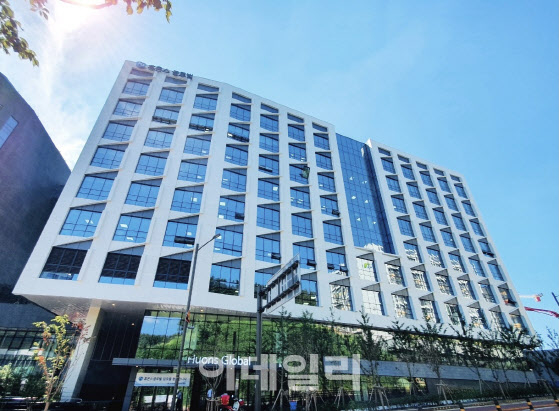
Huons Group’s Pangyo headquarters. (Photo courtesy of Huons Group)
A special committee established by Huons also recommended that the merger be halted. The committee, consisting of two outside directors and one external expert, reportedly reviewed factors including government policies on shareholder protection, opposition from Huons Global shareholders, changing market conditions and the decline in Huons’ share price.
Market attention is now expected to shift toward Huonslab’s growth strategy following the collapse of the merger. Huonslab is developing HyDIFFUZE, a platform technology designed to convert intravenous formulations into subcutaneous formulations. The company plans to continue pursuing global licensing opportunities for the platform regardless of the merger.
Funding for Huonslab’s R&D remains a key issue. The company posted an operating loss of KRW 10.2 billion last year and is in a capital impairment position, raising the possibility that it may need additional support from the holding company, external investment or licensing proceeds.
A Huons official said, “The need to secure business synergies and mid- to long-term growth engines through a merger remains valid, but we placed the highest priority on protecting shareholder value.”
◇Vivozon Pharmaceutical rises on Anapra Injection supply deal in China
Vivozon Pharmaceutical gained sharply after announcing a supply agreement in China for its non-opioid analgesic Anapra Injection. Investor interest increased on expectations that the company could use Hainan’s medical special zone as a foothold for broader expansion into the Chinese market.
Vivozon Pharmaceutical closed at KRW 3,125, up KRW 255, or 8.89%, from the previous session. The gain followed news that the company had signed a finished-product supply agreement for Anapra Injection with a Chinese company.
The company said it had entered into the agreement with Company G, based in Hainan Province.
Vivozon Pharmaceutical plans to begin supplying the drug through the Boao Lecheng International Medical Tourism Pilot Zone in Hainan, a government-designated medical and biotechnology hub.
The Hainan medical special zone allows certain innovative drugs approved overseas to be used clinically under specific conditions before they receive full approval from China’s National Medical Products Administration, or NMPA. This framework can provide overseas drug developers with an opportunity to accumulate real-world prescription experience and clinical data in Chinese patients before pursuing nationwide approval.
Vivozon Pharmaceutical’s non-opioid analgesic Anapra Injection. (Photo courtesy of Vivozon Group)
Company G has experience supporting the introduction of overseas innovative drugs and medical devices that have not yet received approval in mainland China.
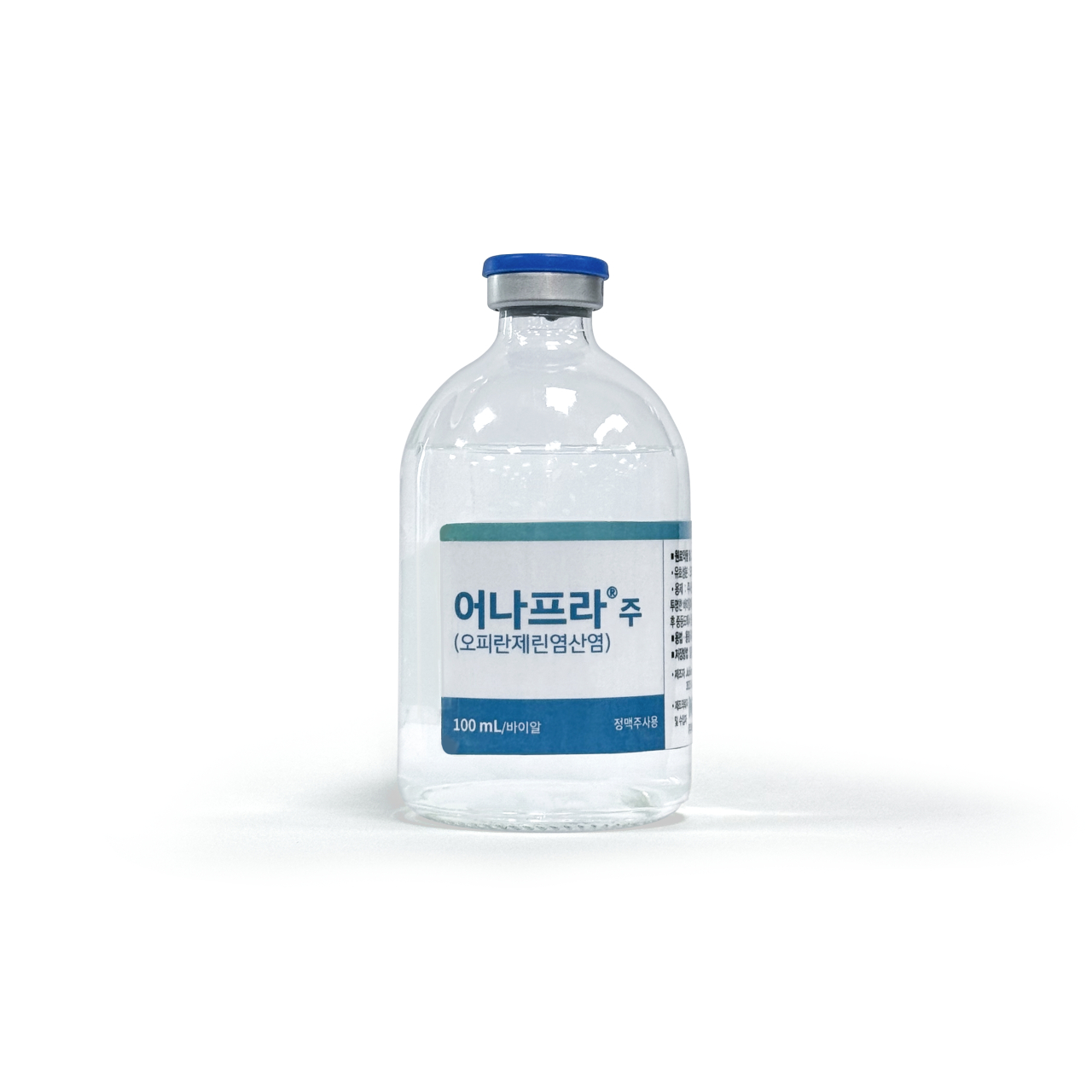
Vivozon Pharmaceutical’s non-opioid analgesic Anapra Injection. (Photo=Vivozon)
Vivozon Pharmaceutical plans to collect real-world use data from Chinese patients in the Hainan zone and then consider expanding into the wider mainland market.
Its ultimate goal is to obtain formal NMPA approval and supply Anapra Injection throughout China. The company also plans to pursue partnerships with major local pharmaceutical companies.
Vivozon Pharmaceutical also plans to sign a separate licensing agreement with its affiliate Vivozon covering the Hainan region. Under the planned arrangement, Vivozon Pharmaceutical will export finished Anapra Injection products to Hainan, while Vivozon will receive royalties.
A Vivozon Pharmaceutical official said, “This finished-product supply agreement marks a meaningful first step into the Chinese market. We plan to use the Hainan medical special zone as a strategic bridgehead to expand the clinical value and competitiveness of Anapra Injection in China and neighboring markets.”
◇CG Invites gains on mRNA cancer vaccine expectations
CG Invites is accelerating the development of an artificial intelligence-based personalized messenger RNA, or mRNA, cancer vaccine. Interest in the company has increased after Moderna and Merck’s personalized mRNA cancer therapy met key endpoints in a global Phase 3 trial, reinforcing expectations for a similar therapeutic strategy being pursued by CG Invites.
CG Invites closed at KRW 998, up KRW 60, or 6.40%, from the previous session.
Personalized mRNA cancer vaccines work by analyzing a patient’s tumor genome to identify neoantigens found specifically on cancer cells and encoding that information into mRNA. Because genetic mutations vary from patient to patient, a key challenge is accurately selecting neoantigens most likely to trigger an immune response and translating them into a stable mRNA therapy.
CG Invites has developed AI-based technology for neoantigen prediction as well as mRNA design technology aimed at improving protein expression and stability. The company has also secured functional sequence technology designed to improve antigen presentation to immune cells, building a platform that spans neoantigen discovery, mRNA design and immune-response optimization.
Combination therapy with immune checkpoint inhibitors is another major development strategy. The approach is designed to induce T-cell responses against cancer through the mRNA vaccine while an anti-PD-1 therapy blocks immune-evasion pathways used by tumor cells.
CG Invites said preclinical studies combining its cancer vaccine with an anti-PD-1 therapy produced greater tumor growth inhibition than either treatment used alone.
Moderna and Merck recently reported positive interim results from the global Phase 3 INTerpath-001 trial evaluating the personalized neoantigen therapy intismeran autogene in combination with Keytruda, or pembrolizumab. The combination significantly improved recurrence-free survival and distant metastasis-free survival compared with Keytruda alone, meeting key trial endpoints.
The results have strengthened expectations for personalized neoantigen-based mRNA therapies more broadly, as they represent a major late-stage clinical validation of the treatment approach.
CG Invites plans to integrate its neoantigen prediction, mRNA design and immune-optimization technologies into a single platform and continue follow-up preclinical studies using cancer patient-derived samples.
A CG Invites official said, “With global Phase 3 data making the therapeutic potential of personalized mRNA cancer vaccines more tangible, we plan to further advance our proprietary platform and improve its prospects for clinical application through additional preclinical studies.”